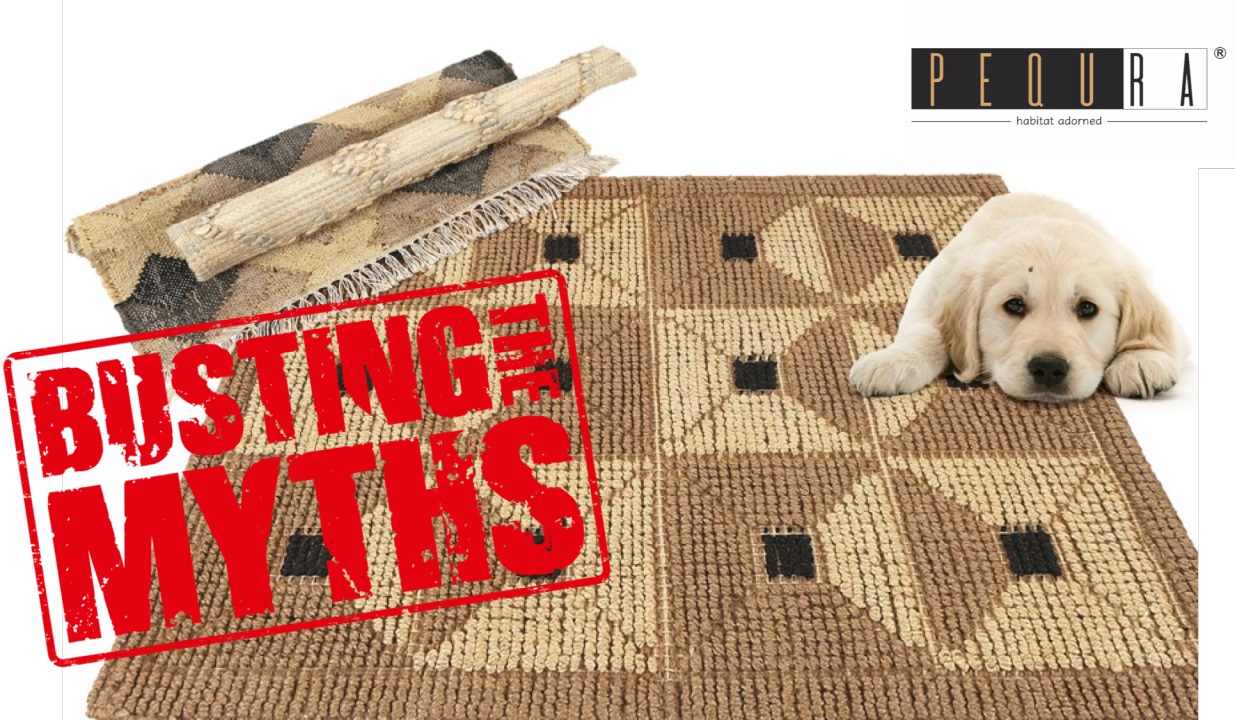
For many centuries, carpets have been among the most popular floor decoration options. Carpets not only enhance the beauty of a room but also help reduce noise and insulate rooms. However, there are a number of myths about carpets that deter many from using them. Before you make a decision to buy a carpet for your house, do take a look at some of the most popular myths and see how they are debunked by facts.
• Myth1: “Carpets help (or encourage) mildew and mold to grow.”
Fact: Excess moisture and dirt when coupled with poor cleaning and/or maintenance habits lead to the growth of mildew and mold. Any surface like tiles, windowpanes, wooden tables, and not only carpets, when not cleaned properly, has particles on it, and when left, moisture with these particles can lead to the occurrence and growth of mold. It is, therefore, imperative that carpets and other things are kept clean and dry to avoid the growth of mildew or mold. In case there are spills, for example, these should be cleaned up immediately.
Reference: Dr. Mike Berry from the University of North Carolina conducted a study where he took materials like tiles, materials used in construction, drywall, and carpets, and exposed them to humidity and high temperatures for three days. These conditions along with a food source are necessary for mildew and mold to grow. At the end of the test period, all the materials, except the synthetic carpet, were covered with mold.
• Myth 2: “Carpets increase the risk of allergies and asthma incidents.”
Fact: Dust particles that are airborne finally settle on the carpet and get trapped. Along with these are allergens and other contaminants. The fibers of the carpet act as a filter and do not allow the dust particles to get airborne again.
Reference: It was a popular belief in Sweden that carpets caused allergies. This led to the Swedes not using carpets for more than a decade to help reduce allergy cases. However,a study by the scientists of the Swedish Institute of Fibre and Polymer Research proved that since 1975 while there was a decline in the use of carpets, there was an increase in the occurrence of allergies amongst the Swedes.
• Myth 3: “Carpets are unsustainable and environmentally unfriendly.”
Fact: This particular myth is of great interest to most due to our interest in going green. The polymer material used to manufacture carpets ultimately comes from hydrocarbons and is considered unsustainable by most. In the last two to three decades, carpet manufacturers have employed methods to reduce waste production and energy consumption and in effect, gradually have reduced the “carpet’s footprints”.
Reference: The CARE program – Carpet America Recovery – is working hard to lessen the carpet’s footprint. Every year, around 6 billion pounds of hydrocarbons go into landfills as carpets. There is a commitment to reduce this number by 40% and direct it to other value recovery opportunities, thereby helping the environment.
These are some of the most talked-about myths related to carpets. It is most useful to know what will work where, how and why, rather than to believe in what you may have been led to believe. It is true that the carpet industry is undergoing continuous changes and progress thereby making the product better and easier to use. There are constant initiatives being taken to handle related myths and address them.
Amit Jain
Updated 28 October 2026

Amit N JainSecond-generation rug manufacturer and exporter since 2007, author of two books on the rug trade, and builder of the systems that run his family business. More about me · The books